How it works
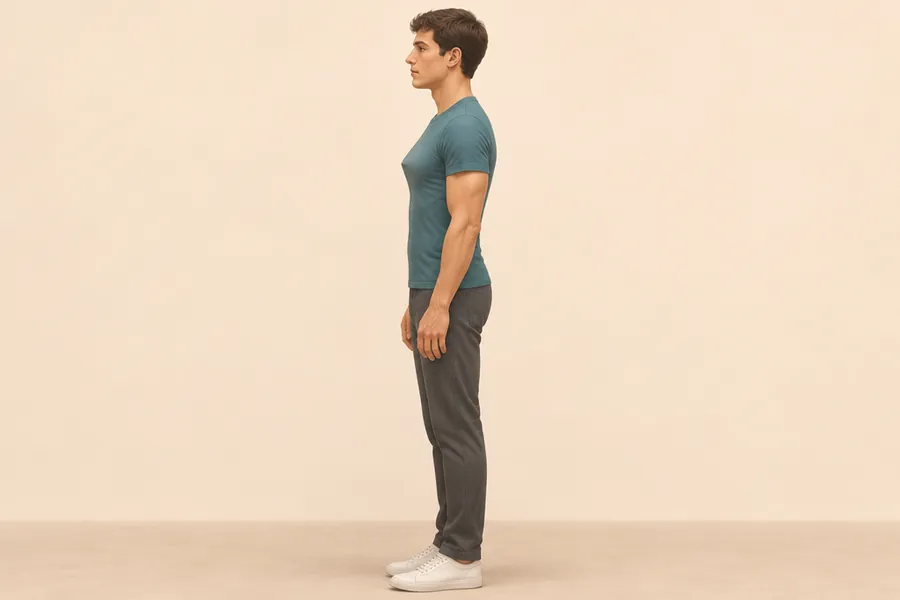
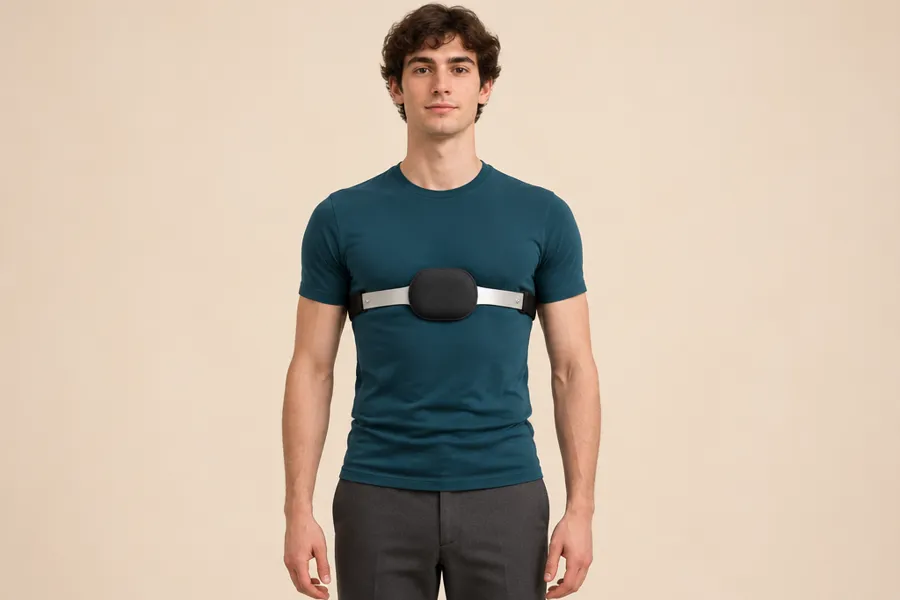
A dynamic compression brace is a thin aluminium band shaped to your chest, with a padded plate on the front over the most protruding point of the sternum and one on the back. Tightening it pushes the sternum back. Worn for months, the pressure lets the cartilages and the chest wall remodel into a flatter shape.
Modern systems measure the pressure, in PSI, needed to push the sternum back into place. This was introduced in Argentina in 2008 and is now used by many centers: it tells whether bracing is likely to work and lets the team adjust the brace at each visit.
Who it suits
- A flexible chest. If the sternum moves back under pressure, bracing is the first choice. The 2024 UK guideline rates it highly effective and safe.
- The common shape, where the middle and lower sternum stick out. The rare upper form (chondromanubrial) is rigid and is usually treated differently.
- A lower starting pressure. In the original Argentinian system, starting below 2.5 PSI avoided skin lesions, and patients needing more than 7.5 PSI were not treated with the brace. In a Dutch study of 631 patients, success fell from 84% to 67% as the starting pressure rose, and was lower above about 8 PSI. In a US program, a fast drop in pressure between the first two visits was a good sign.
The two phases
- Correction. The brace is worn most of the day until the chest is flat. In the first Argentinian series, patients wore it on average 7 hours a day for 7 months; in a 12-year series from Buenos Aires, correction took about 9 months.
- Maintenance. Once the chest is corrected, the brace is worn less, often only at night, to hold the result while you are still growing. In Calgary, patients wore it 8 hours a night until they had finished growing. Another program moved to this “retainer” mode once less than 1 PSI was needed: 144 of 460 patients reached it, after a median of 5.5 months.
All in all, treatment usually lasts from several months to over a year: 14 months on average in a Dutch series of 286 patients.
How often it works
Success rates vary a lot between studies, mostly because of how success is defined and how many patients stop early:
| Study | Patients | Result |
|---|---|---|
| Argentina, 2008 | 208 | 88% good or excellent among those who completed; 13% dropped out |
| Netherlands, 2024 | 631 | 74% success, 14% failure, 13% lost to follow-up |
| China, 2021 | 767 | 84% success |
| Scotland, 2026 | 612 | 35% fully resolved, plus 12% resolved to the patient’s satisfaction |
| USA, 10 years, 2021 | 364 | 40% success, 32% dropped out |
In a stricter Canadian prospective study, success was 56%, lower in older and asymmetric patients. The common thread is wearing it as prescribed. In the Scottish series, wear time was the strongest predictor of success. In a London program that reduced the chest at the first fitting and followed patients closely, 244 of 249 kept the correction.
Side effects
Bracing is safe, but not always comfortable. In a review of 1,185 patients, 12% reported discomfort and 5% had skin lesions under the pad. In a long-term survey, about a third of patients reported some negative effect. Pain, broken skin or difficulty breathing with the brace on should be reported to the team, who can lower the pressure.
Can it come back?
Sometimes. Recurrence was about 3% in the 1,185-patient review and 5% in the 10-year US series. In a long-term survey, 23% of the 42 patients who answered that question said the protrusion had come back. In Calgary, the one recurrence was put down to stopping the night-time phase too early. This is why centers ask you to keep the maintenance phase until you finish growing.
Quality of life
In a Dutch prospective study of 225 patients aged 10–21, quality of life improved during bracing, mostly in the first 6–12 months. 95% were satisfied and 87% would choose the brace again. Patients whose treatment didn’t work showed no improvement. In the London program, anxiety and depression scores fell during treatment.
Bracing in adults
We found no study dedicated to adults. The chest gets stiffer with age, and in a Chinese series of 767 patients bracing failed more often in older children; the authors suggest surgery may be preferred after 15. In the Scottish series, however, age didn’t predict success, while wear time did. Since the pressure test shows how stiff your chest is, it’s a reasonable first step at any age: if the sternum doesn’t move back, a brace is unlikely to help.
Brace or surgery?
In the Dutch study, 92% of 105 patients who had open surgery (Ravitch) had a good result, but 32% had a complication, while brace problems are mostly discomfort and skin irritation. That’s why the brace comes first and surgery is kept for rigid or complex chests, or when bracing hasn’t worked.
All the studies cited here used custom braces fitted and adjusted by a specialist team. Ask a center that treats chest wall deformities before buying a brace.
For the bigger picture, see the guide on pectus carinatum.