
PectusExcavatum AI Coach Open the app

Guide

Pectus excavatum vs pectus carinatum: the differences

One sinks in, the other sticks out. They belong to the same family of chest wall deformities, but they behave differently and are treated differently.

Updated November 22, 2026 · 4-minute read

At a glance

Pectus excavatumPectus carinatum
ShapeThe sternum sinks in (sunken or funnel chest)The sternum sticks out (pigeon chest)
How commonThe most common formAbout 2 to 5 times less common
When it showsOften from early childhood; deepens in pubertyUsually from the early teens
Heart and lungsCan press on the heart and slightly limit the lungs in marked formsEffects are rare; mainly appearance, sometimes tenderness
First optionWatch, exercise for posture, vacuum bellDynamic compression brace
SurgeryNuss or RavitchModified Ravitch, Abramson, combined techniques

How common each one is

Pectus excavatum is clearly the more common one. A review puts carinatum at 2 to 4 times less frequent, depending on the population; in a Brazilian school screening the two were found in 1.3% and 0.7% of children, while surgical series see about five excavatum for every carinatum.

Mixed forms

Some chests have both: one side sunken and the other protruding, or the upper sternum sticking out and the lower part sunken (the rare chondromanubrial or Currarino-Silverman form). In a series of carinatum patients, about 1 in 11 had a mixed shape. Marfan syndrome is more frequent in mixed forms: 20% versus about 5% overall in one study. Mixed and asymmetric shapes are where open or combined surgical techniques are used most.

Can one turn into the other?

There is no evidence that one form spontaneously turns into the other. After the Nuss procedure the chest can, rarely, be pushed too far and end up protruding: 2 cases out of 1,034 in a large series needed another operation.

Different treatments

The main practical difference is that a flexible carinatum can often be corrected from the outside with a brace, while the excavatum can only be lifted from the outside in part, with a vacuum bell, and marked forms need surgery. In both, the effect on body image is real and worth taking seriously.

Which one do I have?

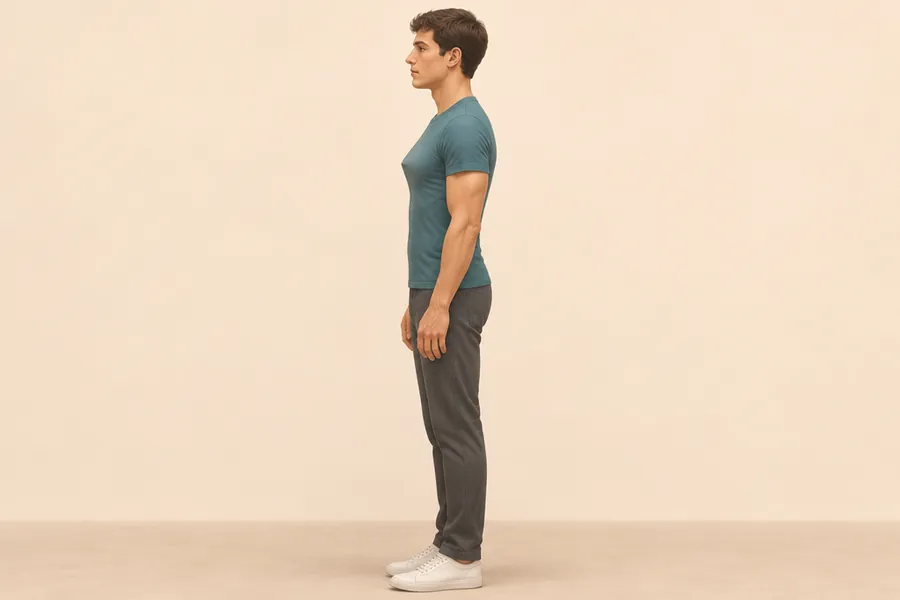
Look at your chest from the side in a mirror: a dent means excavatum, a ridge means carinatum, both means a mixed form. A doctor who treats chest wall deformities can confirm it. Read more in the guides on pectus excavatum and pectus carinatum.

Frequently asked questions

Which is more common, pectus excavatum or carinatum?

Pectus excavatum: depending on the study, two to five times more common than carinatum.

Can you have both pectus excavatum and carinatum?

Yes: mixed forms exist, with one side sunken and the other protruding, or the upper sternum protruding and the lower part sunken.

Can pectus excavatum turn into pectus carinatum?

Not on its own, as far as studies show. Rarely, surgery for excavatum overcorrects the chest into a protruding shape.

Sources

  1. Janssen N, Coorens NA, Franssen AJPM, et al. Pectus excavatum and carinatum: a narrative review of epidemiology, etiopathogenesis, clinical features, and classification. J Thorac Dis 2024;16(2):1687–1701.
  2. Westphal FL, Lima LC, Lima Neto JC, et al. Prevalence of pectus carinatum and pectus excavatum in students in the city of Manaus, Brazil. J Bras Pneumol 2009;35(3):221–6.
  3. Shamberger RC, Welch KJ. Surgical correction of pectus carinatum. J Pediatr Surg 1987;22(1):48–53.
  4. Behr CA, Denning NL, Kallis MP, et al. The incidence of Marfan syndrome and cardiac anomalies in patients presenting with pectus deformities. J Pediatr Surg 2019;54(9):1926–8.
  5. Gritsiuta AI, Bracken A, Beebe K, Pechetov AA. Currarino-Silverman syndrome: diagnosis and treatment of rare chest wall deformity, a case series. J Thorac Dis 2021;13(5):2968–78.
  6. Kelly RE Jr, Obermeyer RJ, Goretsky MJ, et al. Recent modifications of the Nuss procedure: the pursuit of safety during the minimally invasive repair of pectus excavatum. Ann Surg 2022;275(2):e496–502.
  7. Dunning J, Burdett C, Child A, et al. The pectus care guidelines: best practice consensus guidelines from the joint specialist societies SCTS/MF/CWIG/BOA/BAPS for the treatment of patients with pectus abnormalities. Eur J Cardiothorac Surg 2024;66(1):ezae166.
  8. de Beer SA, Blom YE, Lopez M, de Jong JR. Measured dynamic compression for pectus carinatum: a systematic review. Semin Pediatr Surg 2018;27(3):175–82.
  9. Steinmann C, Krille S, Mueller A, et al. Pectus excavatum and pectus carinatum patients suffer from lower quality of life and impaired body image: a control group comparison of psychological characteristics prior to surgical correction. Eur J Cardiothorac Surg 2011;40(5):1138–45.
  10. Park HJ, Kim KS. The sandwich technique for repair of pectus carinatum and excavatum/carinatum complex. Ann Cardiothorac Surg 2016;5(5):434–9.